The Ware for October 2026 is shown below:
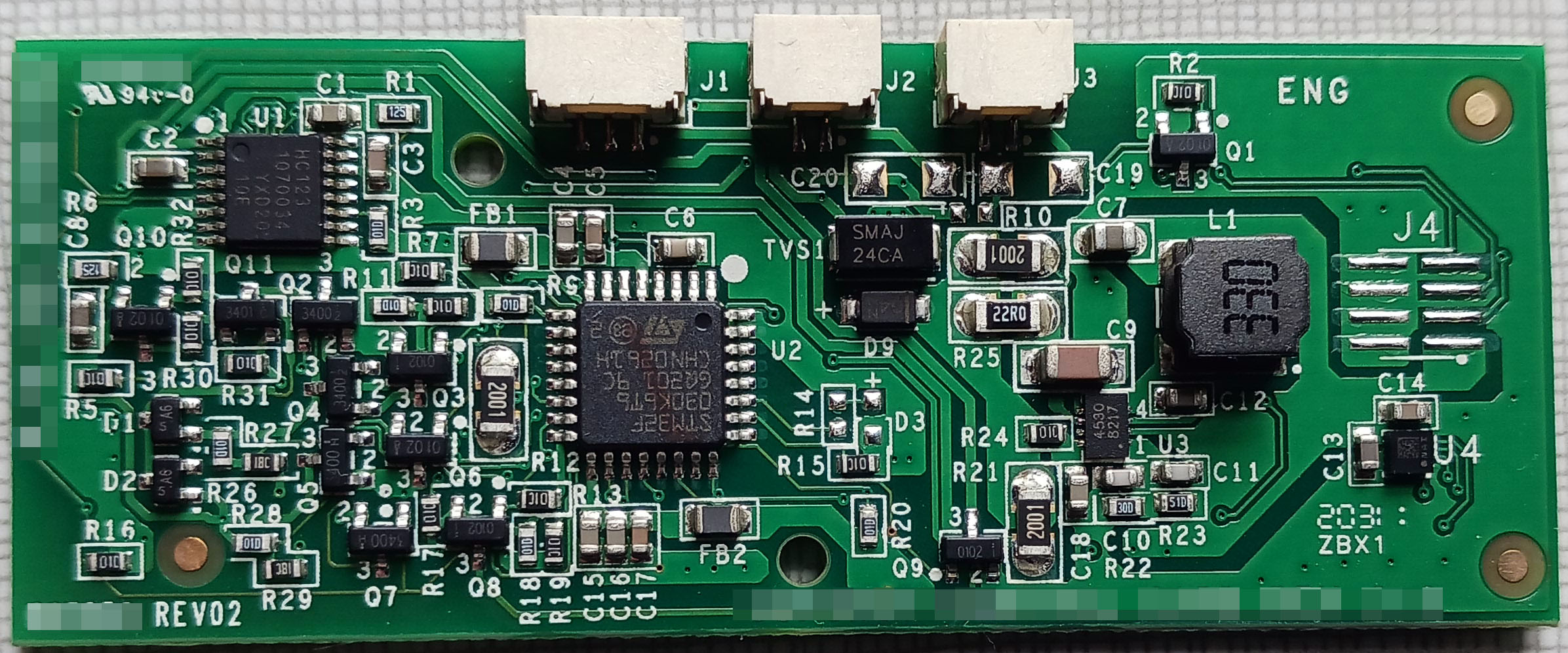
Another contribution from FETguy and Renew Computers! I found this board to be interesting mainly because I always wondered how these things worked. The construction reveals a trick which ended up as a surprise, at least to me!
A couple of administrative notes – I am counting my blessings that this site is still up despite the heightened level of CVE’s. This is an aging WordPress blog (its origins pre-date “the cloud” and HTML5!), which uses PHP at its core, and kudos to Pair Networks for being on top of it and keeping this bit of infrastructure up and running. That being said, I don’t think we’re out of the thick of it so I fully expect some downtime in the near future.
Also, if you’re wondering what I’m up to on Baochip, I do weekly updates on Discord in Baochip’s #the-commit-log channel. I only cross-post long-read technimaterials and the monthly name that ware to the blog, keeping in line with my historical practices here.
That’s an LIS2DH accelerometer bottom-right…
No good theories as to what this thing is.
The HC123 is a pulse generator. It appears an output from the MCU is hooked to one of the reset inputs, and an output goes into that surprisingly complicated sea of transistors.
Presumably that’s a buck voltage converter at the right (chip with marking 4530, inductor, and some misc parts)
I didn’t have much success at trying to figure out where the traces from the connectors are going.
My “wrong answers only” answer: Needlessly complicated pinball machine tilt sensor.
Big 24V TVS on input (SMAJ24) suggests this can be run at up to 24V, but in practice it still might run off lower.
Wild guess regarding the pulse generator: for testing continuity of explosive detonators. Like in airbags.
SOT23 parts:
3400 = N fet
3401 = P fet
0102 = ??? (could be NPN?)
A6 = diode(s)
With the accelerometer, MCU, and pulse stretching, might it be something that records operation of a motor or machine that vibrates or moves in some fashion from time to time?
With the combination of accelerometer and pulse generator, I was tempted to say an airbag deployment sensor.
The 24 V TVS is consistent with an automotive (12 V) application. Not sure why it’s bi-directional, and this device wouldn’t survive a load dump, but maybe an aftermarket device rather than OEM?
Of course, aftermarket airbags is an oxymoron!
The whole look and feel of the ware is not high-quality safety-critical.
So I’ll go with an aftermarket car alarm.
My guess is 3D Printer/CNC controller board for the stepper motors, 3-axis, plus accelerometer and friends. 24V and the STM32 ARM make this more likely but I’m really curious about what other potential purposes this was designed for.
Wild guess: clothes washer shake detector? The board quality seems about right for a commodity item like that.
The airbag-sensor and car-alarm theories in the comments are a fun rabbit hole — that 24V TVS detail is a nice clue nobody would catch without knowing automotive load dump specs.
Funny enough, reverse-engineering a mystery board isn’t so different from figuring out why a house in Mobile is failing early — you trace the hidden layer (vapor barrier, flashing, fastening pattern) before you can explain the symptom on the surface. Humidity down here does to siding what corrosion does to old PCB traces: slow, hidden damage until something finally fails.
Any update from the Discord commit-log on whether the mystery board got identified?