The Ware for September 2026 is shown below.
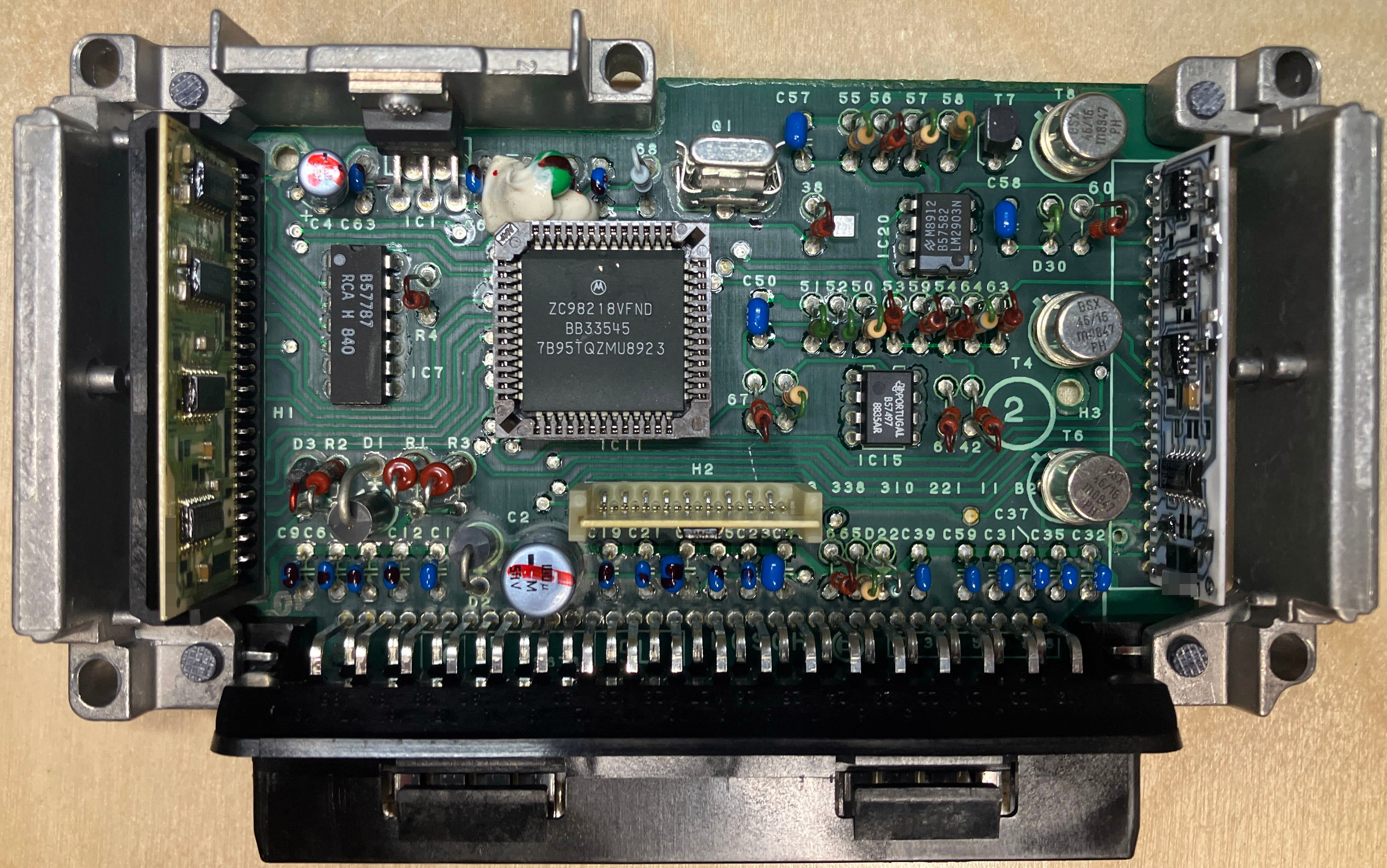
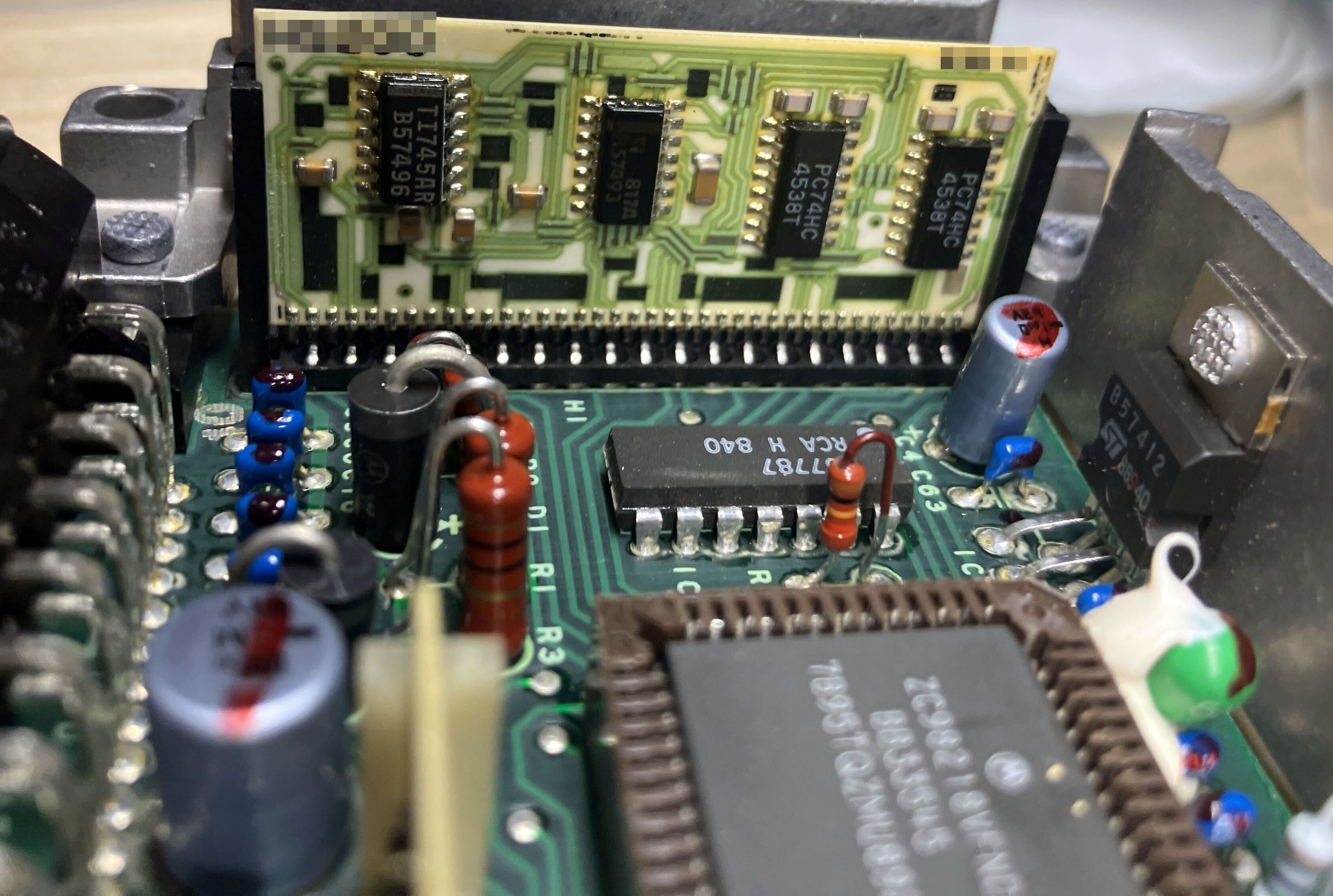
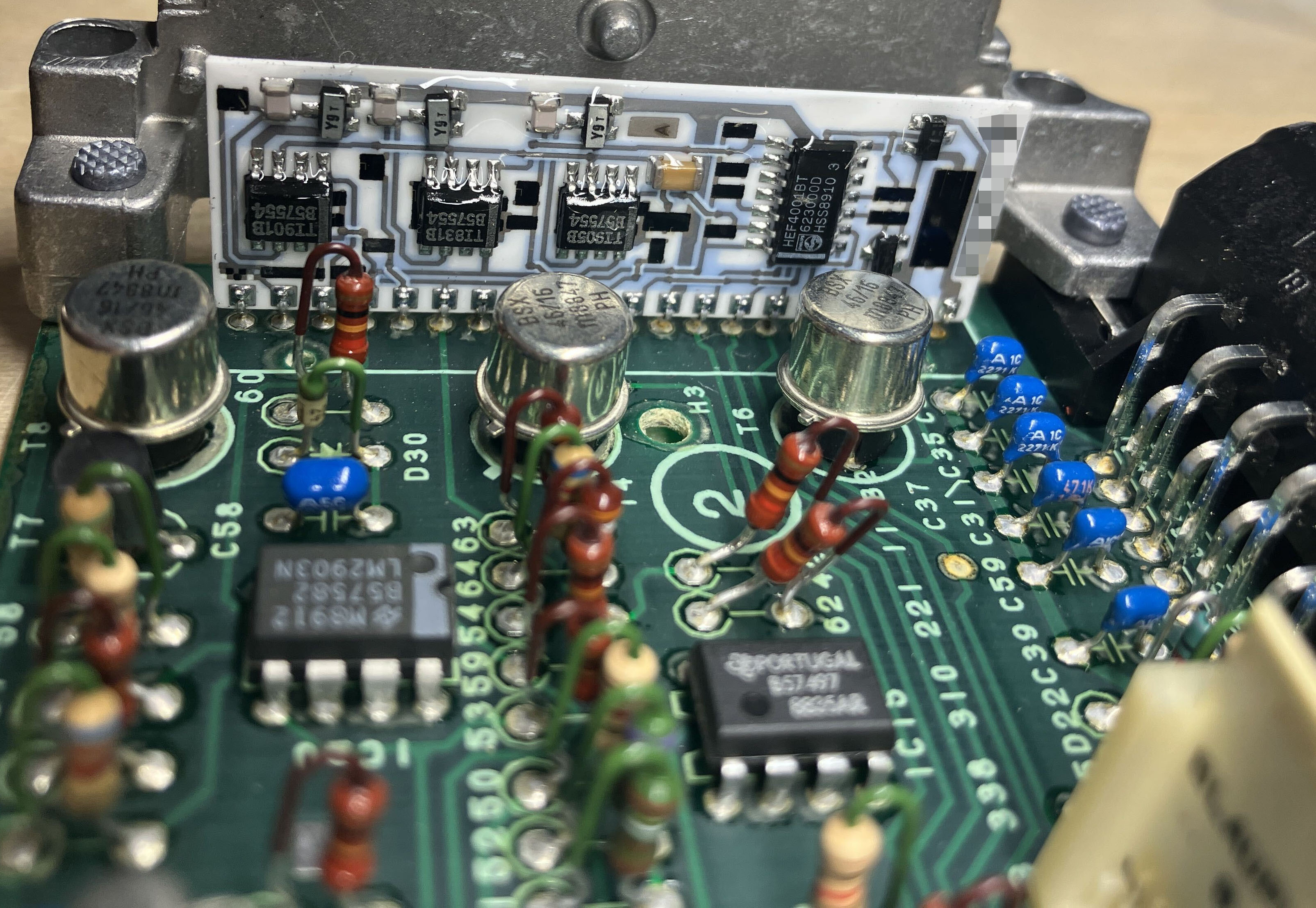
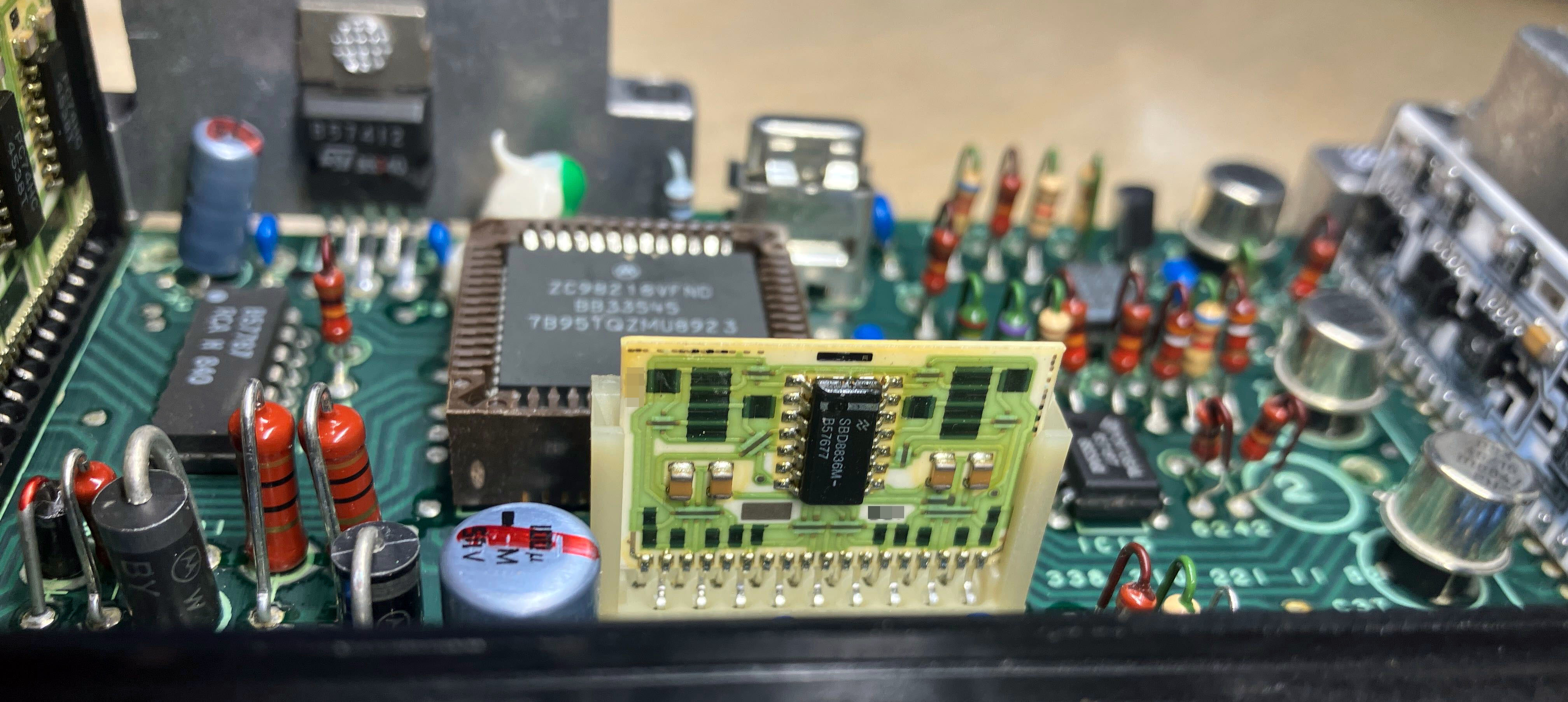
We seem to be on a theme of hybrid circuits! This aesthetically pleasing ware was submitted anonymously. Thank you, you know who you are!
While I realize that color palettes are not actually a deciding factor in most circuit board designs, I still appreciate it when things work out to have a nice color scheme overall. I like how the bold colors of the main circuit board draw contrast with the pastel earth-tones of the hybrid circuits.
The thermal management issues I encountered in my prototype make this selection problematic.
Looks automotive to me, based on the die cast frame and riveted attachments. I’d say European based on component brands.
Maybe an ECU as there wasn’t much else of this complexity in 1989 cars. I don’t see any obvious injector drivers, so maybe the engine still had a carburetor. We have a 1985 Nissan with a carburetor and an elaborate uC based ECU to manage the emission controls via a bunch of sensors and actuators. Maybe this ware is like that. Or maybe the injector drivers are elsewhere and this module still has a lot of sensors and actuators to oversee.
Or maybe it’s not an ECU at all but an early “climate control” or something.
Beautiful construction!
I’m wondering which parts made you think it’s European? I can see National Semi, TI, Motorola, not exactly European brands :) I’d rather expect Siemens or SGS-Thomson :)
Agreed. It looks like it’s made for a car.
There’s a Bosch logo peeking through the pins in the first photo (and most of the parts have Bosch part numbers anyway).
The date codes seem to put the board’s manufacture after 1989.
The 2-row 35-position connector seems to match the Jetronic ECUs, but the cast heat sinks don’t match any chassis I’ve seen yet. The two heat-sinks on the side appear not to be used, which I can’t explain.
I wonder what happened to CircuitDesign’s vehicle?
Based on my research, it’s a Bosch Motronic M1.0 ECU, Which had variants used on the BMW M3 and a whole bunch of other vehicles from the 1980s.
Definitely a late version of an ECU that had been around for some time, given the date codes and the unused heatsinks.
I can’t find any info that matches that chassis either though. I’m not a car person. :)
Could it be for an EV or a diesel? As FETguy said, It’s missing switches for the fuel injectors (Which would make sense in an EV) and I’m not sure there are switches for ignition coils either (which would make sense in an EV or a diesel).
I don’t know what they’d call the powertrain controller on an EV, and it seems possible to me that no one has taken one of these apart and posted well documented pictures on the internet, so we might just be left with a reverse engineering based approach to confirm it.
What’s the purpose of the clip on the crystal Q1? Mechanical stability? Ensuring the case is grounded? I’m just guessing here.
The European parts I see are some Philips transistors and chips and the ST 5 pin TO-220, which I think is the voltage regulator. The bent-and-dipped resistors are Philips. I can’t remember that that stylized A is on the blue ceramic caps, but I think it is European. A US car maker would use different resistors and capacitors.
True, there are US chip brands in there, esp the micro, which looks like a good old ‘HC05 or ‘HC11. But there are no Japanese branded parts, so that lets those car makers out.
That leaves European, and the Bosch marking confirms that.
Could this be to retrofit an engine for aviation?
Now I remember where I’ve seen those waffle top rivets. . . in the Bosch voltage regulator of my 1966 VW bug! It was completely electromechanical, but used that same method of staking for many of the connections.
Feels like a car radio
Universal Concrete is a resource site with concrete calculators and practical guides. The self-levelling compound calculator estimates quantities from room or zone measurements or a complete regular-grid survey using the coverage rate for the product you select. It is a public-beta estimating tool not a specification or a check of product suitability. Check the substrate manufacturer instructions and safety data sheet before choosing a product. Self-levelling compound calculator Feedback on clarity and usability is welcome.